I designed user flows, wireframes and Figma mockups, and wrote functional specifications and acceptance criteria for the team.
Discovery, availability, reservation and payment must fit together. Players and operators use different interfaces around the same service.
Decisions & deliverables
Documented journeys, mockups and product rules. The developers built the application; the screens here explain the design work and do not reproduce original Figma files.
UX & specifications / a specification is not a shipped feature
I framed the business rules and designed n8n workflows for prospecting and CRM integration, with duplicate checks, retries, error handling and traceability.
Prospecting combines sourcing, enrichment, qualification, contact research and follow-up. It needs reliable data and a human decision before dispatch.
Decisions & deliverables
A documented pipeline from sourcing to human review, dispatch and feedback handling. The local audit confirms versioned workflow structure, not live production operation.
Designed & documented / current end-to-end operation not verified
One company. Several kinds of contribution.
Co-founder and Product Manager since 2023. I connect business needs, product design and execution, then build internal tools with AI assistance.
Co-found and develop the activity
I helped create the project, shape the offer, work with early customers and organise the people and external developers involved. The offer evolved from the first platform through a rebuild, towards activities and local authorities.
Frame and coordinate the product
Needs from players and operators become vision, MVP scope, roadmap, backlog, functional rules and acceptance. I coordinate design, tech and business; the product application was implemented by the development team.
Figma flows and functional specifications connect facility discovery, availability, booking, payment and the operator’s planning. The shared-complex example below shows how I formalise roles, recurring use and exceptions.
I designed and developed a custom commercial application independently with AI assistance. Prospect records, history, tasks, Lead 360 and draft review connect commercial work to the separate prospecting workflow.
I design sourcing, qualification and review workflows, plus a reusable specification system from product sources to branded HTML/PDF. Marketing is a separate inbound project with human validation, still in development.
How do you share a sports complex between several associations?
I structure spaces, roles, recurring allocations and exceptions into usable booking journeys.
Reconstructed teaching case. All planning data is fictional; this is not the production platform.
Main hall · Week 1
Time
Mon
Tue
Wed
Thu
Fri
Sat
Sun
16:00
17:00
18:00
19:00
20:00
↻ Weekly · ? Pending · ! Conflict · ↗ Changed
See the design rules
One incompatible allocation per space and time; a request is not a confirmation; an exception changes one occurrence, not the whole series.
Spaces, recurrence and role separation come from documented use cases. The times, teams, example changes and visibility conventions are teaching choices. No automatic priority or contractual right is inferred.
This reconstruction demonstrates my functional design approach. It is not an original specification, a production booking engine or an access-control system.
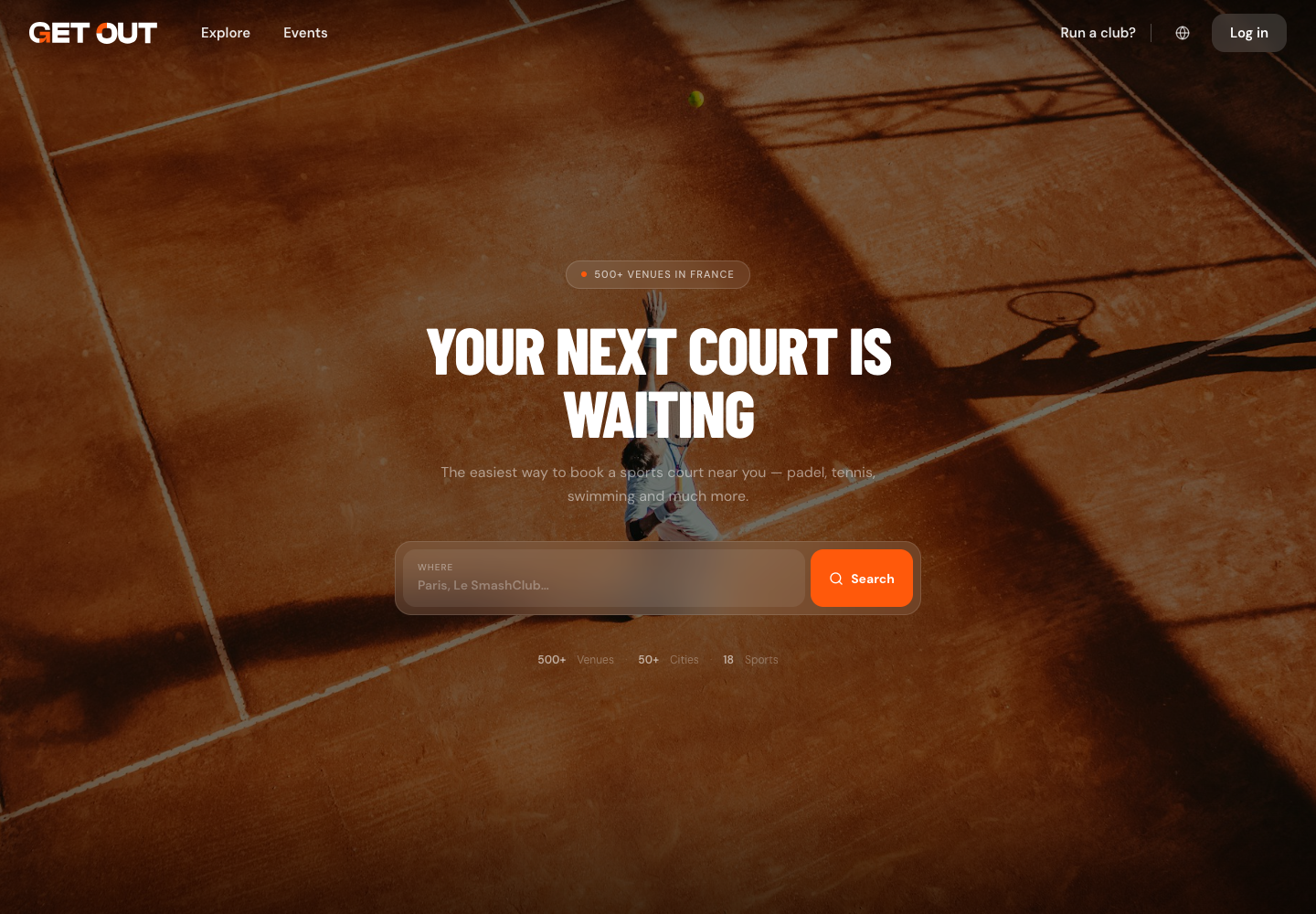
GetOut, in the real world.
A sports platform delivered with the team. Explore the public site.
Inbound is distinct from outbound prospecting. Instagram and LinkedIn prepare content from reliable sources, with design, provenance checks and human review. My goal is an organisation whose repetitive processes can be assisted and orchestrated, not an already autonomous company.
Instagram uses local sports evidence, exact catalogue matching, ideas and an editorial calendar. I distinguish a discoverable place from a bookable partner.
Structured drafts, brand checks, media provenance and local carousel rendering are documented. The pipeline prepares content; a human reviews the hook, facts, rights and final design.
Instagram is locally advanced without proven autonomous publication. LinkedIn has initial B2B models, QA and rendering prototypes, not a completed orchestration pipeline.
Delivery and development status
The 18 October consolidation reports the commercial CRM and Lead 360 L1 deployed. Recent approval-safety changes retained a separate local release status. The workflow reads into the CRM through FDW; controlled decisions use dedicated Edge/RPC paths. No full bidirectional synchronisation or autonomous campaign is claimed.
Specification documents and local marketing renders are distinct from deployed product features or published posts. Original commercial documents remain private. The conceptual models use fictional data.